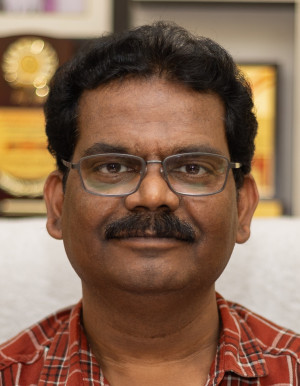
Prof. Dr. Y. Thaweesak King Mongkuts University of Technology Thonburi, Thailand
Prof. MAEDA Kazuaki Full Professor CHUBU UNIVERSITY Matsumoto-cho, Aichi, JAPAN
Asst. Prof. Saba Yunus Mahila Mahavidyalaya P.G. College, Kanpur, India
Assist. Prof. Siamak Haji Yakhchali Univesity of Tehran, Iran
Prof. Dr. Nuno Alexandre Soares Domingues Instituto Superior de Engenharia de Lisboa and Instituto de Comunicação da NOVA (ICNOVA) FCSH-UNL (Portugal)
DR. HEMANTKUMAR P. BULSARA In charge - Management section, Applied Mathematics and Humanities Department, S. V. National Institute of Technology, Surat, India
Prof. Dr. Dinesh C. Sharma Professor & Head-Zoology, K.M. Govt. Girls P.G. College, Badalpur, UP, India
All Abstracts, Reviews, short articles, Full articles, Posters are welcomed related with any of the following research fields:
Epistemology: The study of knowledge—how we know what we know and the boundaries of human understanding.
Ethics and Value Theory: Moral philosophy, meta-ethics, and practical applied ethics (e.g., bioethics, AI ethics).
Metaphysics: The fundamental nature of reality, existence, identity, and time.
Logic: The structure of valid inference, formal arguments, and critical reasoning.
Historiography: The study of how history is written, historical methodologies, and how biases shape our view of the past.
Social and Cultural History: The daily lives, traditions, and shifts of ordinary people rather than just political rulers.
Global, Transnational, and Imperial History: How cross-border movements, colonialism, trade, and empires shaped world systems.
Intellectual and Political History: The evolution of major ideas, ideologies, laws, and state structures over time.
Literary Theory: Frameworks for analyzing texts, including post-colonialism, structuralism, psychoanalysis, and gender theory.
Comparative Literature: The study of literature across national borders, languages, and historical periods.
Genre Studies: The evolution and cultural significance of specific forms like poetry, the novel, drama, and digital narratives.
Art History and Curation: The evolution of visual art styles, movements, and the cultural contexts of artistic production.
Musicology and Ethnomusicology: The study of music history, theory, and how music functions as a cultural practice across societies.
Performance Studies and Theater: The analysis of live performance, ritual, and theater as mirrors of societal shifts.
Phonetics and Phonology: The physical production and mental patterns of speech sounds.
Syntax and Semantics: The structural rules of language and how meaning is constructed.
Sociolinguistics: How language varies across different social groups, regions, ethnicities, and power dynamics.
Historical Linguistics: How languages evolve, split, and influence one another over time.
Social Stratification and Inequality: The study of class, race, gender, and how power and resources are unequally distributed.
Sociology of Institutions: How structural entities like education, religion, the family, and the healthcare system shape behavior.
Urban and Rural Sociology: The study of community life, migration, gentrification, and spatial organization.
Collective Behavior and Social Movements: How crowds form, how revolutions start, and how social change is organized.
Cultural Anthropology: The comparative study of human cultures, beliefs, rituals, and social organization.
Archaeology: The recovery and analysis of material culture (artifacts, architecture) to understand past societies.
Biological/Physical Anthropology: Human evolution, genetic adaptation, and primatology.
Linguistic Anthropology: How language shapes social life, identity, and worldviews.
Comparative Politics: The study of domestic politics, political structures, and governance systems across different countries.
International Relations: The interactions between nation-states, international organizations, and global security.
Political Theory and Philosophy: The concepts of justice, power, democracy, and liberty that underpin political systems.
Public Policy and Administration: How laws are formulated, evaluated, and implemented within governments.
Microeconomics: The behavior of individual decision-makers, including households, workers, and businesses.
Macroeconomics: The study of economy-wide phenomena, such as inflation, unemployment, economic growth, and monetary policy.
Development Economics: How low-income countries can improve their economic, social, and political conditions.
Behavioral Economics: The psychological factors that influence economic decisions, breaking away from standard rational choice models.
Geopolitics and Spatial Politics: How geographic factors influence international politics and territorial disputes.
Environmental Geography: The reciprocal relationship between human societies and the natural environment.
Population and Migration Studies: The tracking of human demographic shifts, border crossings, and urbanization.
Social Psychology: How individuals think about, influence, and relate to one another within groups.
Developmental Psychology: How human cognitive, emotional, and social capacities change across the lifespan.
Cognitive Psychology: The study of internal mental processes like memory, perception, and decision-making.
These topics exist precisely at the intersection of the Humanities and Social Sciences, requiring tools from both sides to be fully understood.
Cultural Studies: Blends sociology, literature, and media studies to analyze how contemporary culture creates and transforms individual experiences.
Gender and Sexuality Studies: Combines history, literature, sociology, and psychology to explore how gender identities and sexual orientations are constructed and institutionalized.
Digital Humanities: Uses computational tools, data science, and digital media to analyze historical records, literature, and language trends.
Environmental Humanities: Merges philosophy (environmental ethics), history (environmental history), and literature with sociology to address climate change and human-nature relations.
Medical Humanities and Social Sciences: Explores the cultural, historical, and sociological aspects of health, illness, and medical practices (e.g., medical anthropology).
Media and Communication Studies: Examines how information is created, consumed, and regulated, combining linguistic analysis with political science and sociology.
Post-Colonial and Decolonial Studies: Analyzes the enduring cultural, economic, and political legacies of colonialism across both the global south and north.
Science, Technology, and Society (STS): Investigates how scientific knowledge and technological tools are shaped by social, political, and cultural values, and vice versa.
Lorem ipsum dolor sit amet, consectetuer adipiscing elit. Donec libero.
2 hour agoLorem ipsum dolor sit amet, consectetuer adipiscing elit. Donec libero.
3 hour ago
For any type of inquiry and support,
you may send an email to
cs@hssmr.org
Copyrights © 2025 ICEHM. All Rights Reserved.